



Most pickups leave the factory with four tie down points. Most loads need more than four, and almost every load needs them in different places. Knowing what an anchor is rated for, and how the strap angle changes that, is the difference between a secure load and one that only looks secure.
How Many Tie Downs Do You Need?
Enough that their combined working load limit is at least half the weight of the load. That is the standard commercial cargo securement rule and it is a sound benchmark for anyone. A 600 lb load therefore needs anchors and straps totalling at least 300 lb of working load limit, and in practice you want considerably more.
Working Load Limit Is Not Breaking Strength
A strap marked 3,000 lb breaking strength is not a 3,000 lb strap. Working load limit is typically a third of that, and it is the only number that matters when you are securing a load. The same applies to the anchor: a bed loop rated 500 lb is rated 500 lb in the direction it was tested, not in every direction.
Match the weakest link. A heavy duty strap through a light factory loop is limited by the loop, and it will be the loop that lets go.
Angle Changes Everything
A strap pulled straight down holds the load down. A strap pulled almost horizontally holds it sideways and does very little to stop it lifting. Neither is wrong, but they do different jobs and a load usually needs both.
- Cross-strap heavy items so each strap resists movement in two directions.
- Keep the angle between strap and bed floor closer to 45 degrees where you can.
- Use edge protection anywhere a strap crosses a sharp corner.
- Re-tension after the first few miles, since loads settle and webbing stretches.
Adding More Anchors
Stake pocket anchors drop into the existing pockets and need no tools, which makes them the easy upgrade. Bolt-in D-rings through the bed floor are stronger and permanent, and they must be fitted with a backing plate underneath. A D-ring bolted through bare bed sheet metal will pull the metal into a cone shape and then through.
Check what is under the floor before drilling. Fuel lines, brake lines and the spare tire winch all live in places that look empty from above.
Secure Storage Counts Too
The most reliable way to stop small items moving is to put them in something bolted down. A drawer unit or a tool box fixed to the bed turns a dozen loose objects into one secured mass, and it removes the daily decision about whether that load really needs strapping.
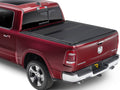
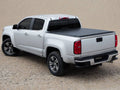
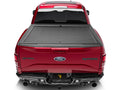
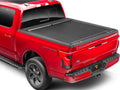
See truck bed drawer units and truck tool boxes for the fixed layer, and a bed cover to keep the rest out of the weather.